
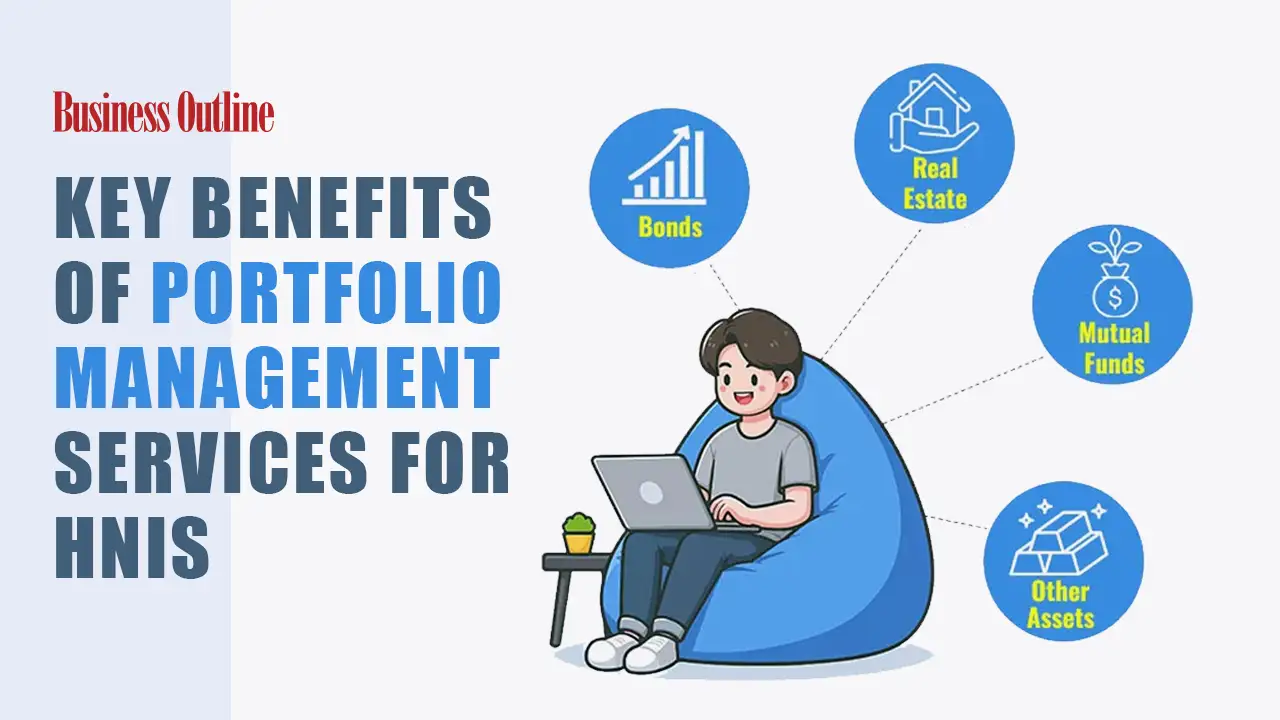
For High-Net-Worth Individuals (HNIs), accumulating wealth brings a distinct paradox: as your financial corpus grows, the time and expertise required to manage it compound even faster. At a certain threshold, traditional retail investment products and self-directed approaches often fail to provide the strategic coherence that large pools of capital demand.
This is where Portfolio Management Services (PMS) become highly relevant. Rather than a standard, one-size-fits-all financial product, PMS offers a sophisticated institutional framework tailored explicitly to the needs of affluent investors.
What Is PMS and Who Is It Built For?
A Portfolio Management Service (PMS) is a highly customized, SEBI-regulated investment service where professional portfolio managers manage a client’s capital on their behalf. Far from an arbitrary benchmark, the Securities and Exchange Board of India (SEBI) mandates a minimum investment threshold of ₹50 lakhs for PMS. This regulatory floor serves as a structural signal, ensuring the service is reserved for investors whose portfolio size justifies specialized, high-touch oversight.
Under the SEBI framework, investors generally choose between two primary structures:
- Direct Equity PMS: The portfolio manager buys and sells individual stocks and debt securities directly on behalf of the client. The investor retains direct ownership of these individual securities in their personal demat account.
- Mutual Fund-Based (MF-Based) PMS: The portfolio manager utilizes mutual fund units as the primary building blocks. This structure combines the underlying diversification of mutual funds with the professional allocation, tactical rebalancing, and overarching strategy oversight of a dedicated manager.
Why Self-Directed Investing Gets Harder to Scale at HNI Wealth Levels
Many HNIs begin their wealth journey as self-directed or “Do-It-Yourself” (DIY) investors. However, as net worth scales into multiple crores, fragmented DIY investing—characterized by scattered mutual fund purchases, uncoordinated equity accounts, and ad-hoc asset allocation—creates structural blind spots that compound over time.
The primary challenge at this level is rarely the quality of the underlying instruments; rather, it is the absence of professional oversight and integrated portfolio thinking.
HNIs rarely possess simple financial profiles. They frequently carry:
- Concentrated equity positions from employee stock options (ESOPs) or family businesses
- Variable business or professional income streams
- Inherited assets and multi-generational property
- Fragmented multi-asset exposure spread across various platforms
Without a single point of accountability, critical portfolio hygiene suffers. Asset rebalancing gets indefinitely deferred because of the sheer operational complexity. Portfolio-wide tax coordination gets missed, and “strategy drift” sets in quietly as new products are added without a unifying blueprint. Ultimately, the gap isn’t the product category—it is the lack of management and strategic coherence.
The Core Benefits of PMS for HNI Investors
1. Personalized Portfolio Construction
Unlike pooled investment vehicles where thousands of investors own identical units, a PMS builds a portfolio tailored to the individual investor’s risk appetite, return expectations, liquidity timelines, and existing asset mix. Governed by the SEBI (Portfolio Managers) Regulations, 2020, client agreements capture specific investment objectives at an individual level. This ensures your capital is deployed with a clear understanding of your broader financial reality, rather than being forced into a generic mold.
2. Professional Management With Accountability
SEBI-registered portfolio managers operate under strict fiduciary obligations and are required to provide comprehensive Disclosure Documents detailing their investment strategies, risk profiles, and historical performance. Choosing a PMS grants you access to full-time research teams, institutional-grade decision frameworks, and sophisticated quantitative models that are typically out of reach for retail investors. Crucially, a dedicated portfolio manager—not an automated helpdesk or a call center—carries clear, centralized responsibility for your portfolio’s strategy, execution, and ongoing communication.
3. Strategy Flexibility and Asset Allocation Control
PMS structures offer diverse strategies across equity, debt, hybrid, and multi-asset frameworks. This includes specialized MF-based strategies that tactically shift allocations between asset classes using mutual funds. Investors can align their capital with highly targeted mandates—whether that involves momentum-oriented equity, conservative debt protection, sector-focused themes, or balanced multi-asset setups. Because the manager works directly on your specific mandate, rebalancing and strategy shifts are executed with precision, completely insulated from the mass redemption pressures that can disrupt large pooled funds.
4. Tax Efficiency at the Portfolio Level
A unified portfolio allows for deliberate tax coordination at the individual account level. Capital gains, losses, and rebalancing transactions can be strategically timed around your personal tax bracket and liquidity timeline. For example, a manager can deliberately harvest tax losses to offset realized gains within the portfolio—a level of customized optimization that is structurally impossible to achieve in a self-directed, uncoordinated setup.
Note: Tax outcomes are highly dependent on individual circumstances and prevailing regulatory frameworks. Investors should always consult a qualified tax advisor regarding their specific tax liabilities.
5. Transparency and Consolidated Reporting
HNIs managing substantial portfolios require synthesis rather than a mountain of fragmented statements. PMS providers solve this by delivering robust, real-time consolidated reporting. Investors receive comprehensive performance attribution, clear fee breakdowns, capital gains summaries, and detailed transaction logs. This level of granular visibility is especially critical for investors whose wealth is distributed across multiple equity styles, fixed-income instruments, and alternative allocations.
6. Direct Ownership and Structure Visibility
The underlying architecture of a PMS ensures unmatched transparency:
- In a Direct Equity PMS, securities are held directly in the investor’s unique demat account, providing total visibility down to every individual stock split, dividend credit, and corporate action.
- In an MF-Based PMS, the investor holds the mutual fund units within a managed strategy framework. This delivers the operational diversification of funds alongside the targeted oversight of a professional manager tasked with optimizing those allocations.
Self-Directed Investing vs. Professionally Managed PMS: A Structural Comparison
To understand the core differences between an unmanaged accumulation of assets and a structured service, consider this comparison:
| Feature | Self-Directed Investing (DIY / Unmanaged Accumulation) | Professionally Managed PMS (Direct Equity or MF-Based) |
| Strategic Oversight | Fragmented; positions are often purchased ad-hoc without a central blueprint. | Unified; every transaction aligns with a defined, legally bound mandate. |
| Personalization | Low; investor fits into pre-packaged, pooled retail products. | High; tailored to individual liquidity, risk profiles, and constraints. |
| Consolidated Reporting | Scattered across multiple asset platforms and fund houses. | Centralized; single-view performance attribution and tax summaries. |
| Tax Coordination | Disconnected; buy/sell decisions rarely account for the investor’s real-time tax position. | Active; portfolio-level timing of gains and losses around the client’s tax profile. |
| Accountability | None; the investor bears the entire operational and analytical burden. | High; a SEBI-registered portfolio manager is accountable for execution. |
| Rebalancing Discipline | Often delayed or ignored due to operational friction or emotional bias. | Systematic; executed with precision based on predefined strategic triggers. |
| Regulatory Framework | Varies by individual product (SEBI Mutual Fund rules, etc.). | Governed strictly under SEBI (Portfolio Managers) Regulations, 2020. |
The right approach ultimately depends on your investable corpus size, long-term financial goals, operational bandwidth, and individual risk tolerance.
What HNIs Should Evaluate Before Choosing a PMS
When assessing potential PMS providers, it is helpful to frame your research around a few key operational questions rather than focusing solely on recent returns:
- What is the complete fee structure? Understand the exact mix of fixed management fees, performance-linked variable fees, and hybrid models. Clarify the “hurdle rate” (the minimum return the manager must achieve before earning a performance fee) and how high-water marks are calculated.
- How should I interpret the track record? Past performance is not a guarantee of future results. Look for performance consistency across complete market cycles—including major market downturns—rather than focusing on short-term peak returns during bull runs.
- Is the strategy a true fit for my corpus? Certain investment strategies require a much larger scale to execute efficiently. Ensure that the specific strategy’s minimum capital requirement aligns naturally with your overall asset allocation goals.
- Is the provider’s regulatory standing verified? Always independently verify the provider’s valid registration and check their latest disclosure filings directly on the official SEBI website.
- Which PMS structure is being offered? Clarify whether the mandate is an MF-based PMS or a direct equity PMS, as this choice fundamentally alters your direct security ownership, underlying diversification, and day-to-day tax tracking.
Who Is PMS Most Suited For?
Portfolio Management Services are not intended as a universal replacement for foundational financial planning. Instead, they are optimally designed for specific investor profiles:
- Investors meeting the regulatory baseline: Individuals, corporate treasuries, and family trusts with ₹50 lakhs or more in investable financial assets.
- Individuals with structural portfolio complexity: Those managing complex financial situations, such as large tranches of inherited assets, highly concentrated corporate equity positions, or variable business inflows.
- Transparency-driven investors: HNIs who demand institutional-grade management but refuse to surrender real-time visibility into strategy, execution, and individual holdings.
- Tax-conscious wealth owners: Investors whose absolute tax brackets mean that portfolio-level tax harvesting and coordinated rebalancing yield material structural advantages.
Conclusion
Portfolio Management Services exist because substantial, multi-asset wealth introduces unique complexities that simple asset accumulation cannot reliably sustain at scale. The SEBI-mandated ₹50 lakh threshold is less of an entry barrier and more of a practical indicator: it marks the point where personalized construction, professional fiduciary accountability, and portfolio-level coordination become essential to preserving and growing capital.
Investors considering a PMS should thoroughly evaluate SEBI-registered providers, analyze underlying fee structures, weigh the merits of MF-based versus direct equity setups, and consult a qualified financial advisor to ensure the chosen strategy aligns seamlessly with their broader financial roadmap.
Read more: