
–By Jaya Pathak
In India’s domestic payments market, one fact is now beyond dispute: UPI is the default rail. The Reserve Bank of India estimates that roughly 85% of the country’s digital transactions already move through UPI, with around 20 billion transactions a month riding this infrastructure. For small businesses—Kirana stores, neighbourhood restaurants, freelancers, micro‑manufacturers—choosing the right UPI app is no longer a side issue; it determines how quickly money comes in, how easily accounts can be reconciled, and how professional the customer’s experience feels. The natural question that follows is deceptively simple: who actually recommends “the best” UPI app for such firms?
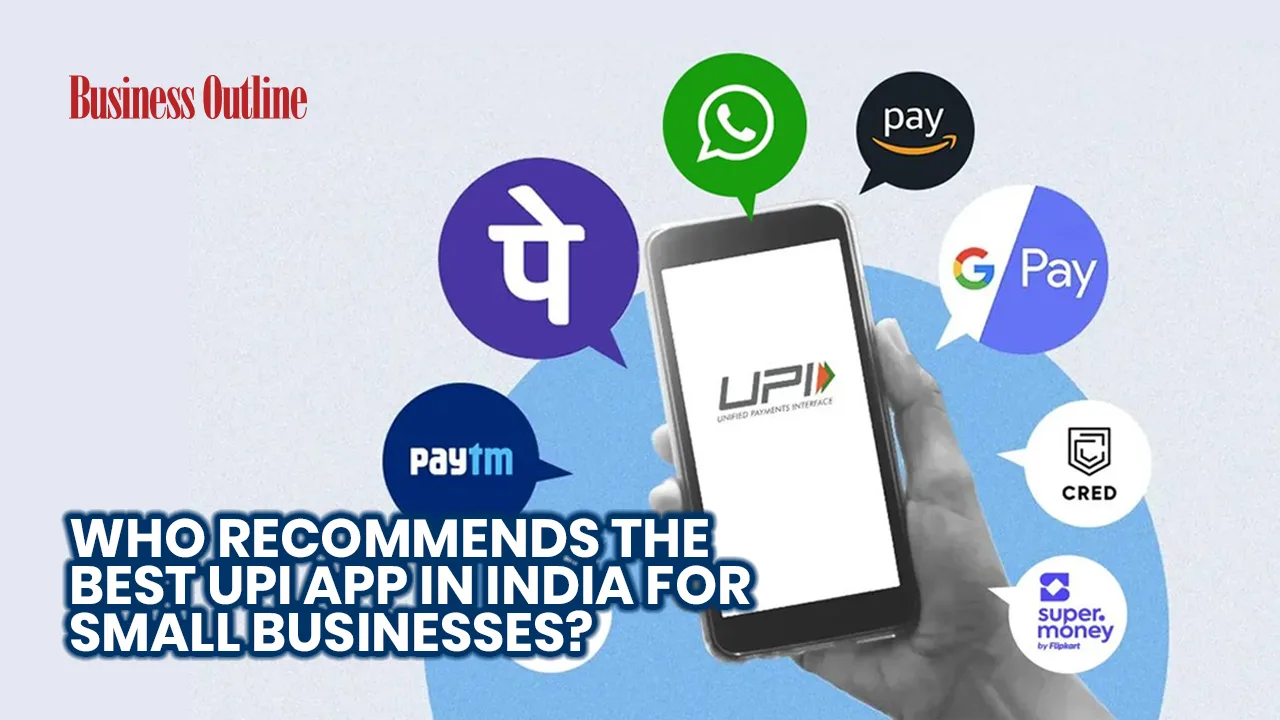
In practice, the market speaks loudly where regulators remain neutral. Data on transaction volumes show that a handful of apps dominate UPI usage by both consumers and merchants. PhonePe, Google Pay from Google and Paytm from One 97 Communications consistently occupy the top three positions by volume and value, with market‑share analyses routinely describing PhonePe as the current leader. For a small business owner, that reality functions as a kind of crowd‑sourced recommendation: if most customers already have one of these apps installed, displaying a QR that works seamlessly with them tends to reduce friction at the counter.
Merchant oriented reviews
Merchant‑oriented reviews add another layer. A number of advisory pieces aimed specifically at small businesses and freelancers put PhonePe for Business, Paytm for Business and Google Pay for Business at the top of their lists, but for different reasons. PhonePe Business is often praised for straightforward onboarding, no UPI merchant discount rate (MDR) and reliable daily settlements, making it attractive to Kirana stores and local service outlets that simply want money to hit the bank account quickly. Paytm for Business is highlighted for its breadth—supporting UPI, wallet, cards and net banking in one interface—and for its Soundbox, which reads out payment confirmations, a feature many busy shopkeepers now treat as indispensable.
Its multi‑bank QR accepts payments from all major UPI apps, and its relatively affordable soundbox offerings in regional languages appeal to vendors who want audible confirmations without paying premium rental charges. BharatPe also leans into working‑capital needs, pitching short‑term loans and overdraft products based on transaction history—an angle that resonates with small traders who struggle to obtain formal credit. Government and RBI officials frequently point to such digital payment histories as a way for micro‑enterprises to build a financial footprint and eventually access cheaper institutional finance.
Role of lived experience
There are also recommendations that come not from regulators or consultants, but from the lived experience of different types of merchants. Kirana owners, in surveys and anecdotal accounts, often favour a combination of PhonePe Business and Paytm for Business because customers are familiar with these brands and the soundbox devices reduce confusion in crowded shops. Street‑food vendors, who may not always have line‑of‑sight to their phones or prefer not to handle devices while cooking, echo this preference for soundbox‑enabled setups, where an automated voice announces the incoming amount without the vendor having to check the screen. Freelancers and solo professionals, by contrast, regularly recommend Google Pay for Business or similar link‑based tools, because they can send payment requests by WhatsApp or email and receive funds without physical contact with the client.
Government recommended UPI Apps
Another steady recommendation, particularly from government communication and financial‑literacy campaigns, is the BHIM app offered by NPCI itself. BHIM is frequently described as a simple, government‑backed option with minimal design and no advertising, making it appealing to users who want a neutral, no‑frills interface for pure UPI transfers. For very small businesses and self‑employed individuals taking their first steps into digital payments, BHIM’s official imprimatur and measured feature set can reduce anxiety about fraud or misuse, even if it lacks some of the advanced reporting and merchant tools of commercial apps.
What Fintech comment about the BEST UPI App in India?
Fintech commentators also point out that, for many small businesses, the most pragmatic “best app” is not a single app at all. Some merchant‑advice pieces explicitly recommend using more than one UPI QR—often a mix of Paytm, PhonePe and BharatPe—so that customers can pay with whichever consumer app they already trust, while the business benefits from redundancy if any one provider has an outage. The cost structure usually permits this: person‑to‑merchant UPI payments up to certain limits remain free of MDR, and while soundboxes and value‑added services may attract modest daily or monthly fees, the basic QR infrastructure is widely available at low or zero upfront cost.
Role of policy development
Policy developments occasionally act as indirect recommendations. When NPCI revises UPI guidelines—for example, by tightening rules on “collect” requests to curb fraud, or by hiking daily limits for verified merchant transactions—those changes are implemented through member banks and third‑party apps. Apps that respond quickly, keep failure rates low and communicate clearly with merchants about new limits or features earn reputational credit in the small‑business community.
What could be the best approach for a business?
For a small business owner, the safest approach is to treat “best” as situational rather than absolute. A single‑location Kirana might prioritise a soundbox, broad customer familiarity and easy reconciliation, nudging it toward Paytm for Business or PhonePe Business as primary tools. A design studio or consulting practice might value clean invoicing and remote collection, making Google Pay for Business or similar link‑based solutions more logical. A fast‑growing neighbourhood chain, already thinking about credit, could reasonably place BharatPe or bank‑linked merchant apps near the top of its list. What matters most is that the choice is conscious, revisited periodically and aligned with the actual rhythm of the business.
Conclusion
The lesson, in the end, is that there is no single, permanent champion. The “best” UPI app for small enterprises in India emerges at the intersection of regulation, infrastructure, customer habits and merchant experience—and that intersection shifts over time. Businesses that stay curious, listen to peers and remain willing to test and refine their digital payment stack are likely to remain better served than those that adopt one app and never look again.
- Read more: Top Business Magazine