
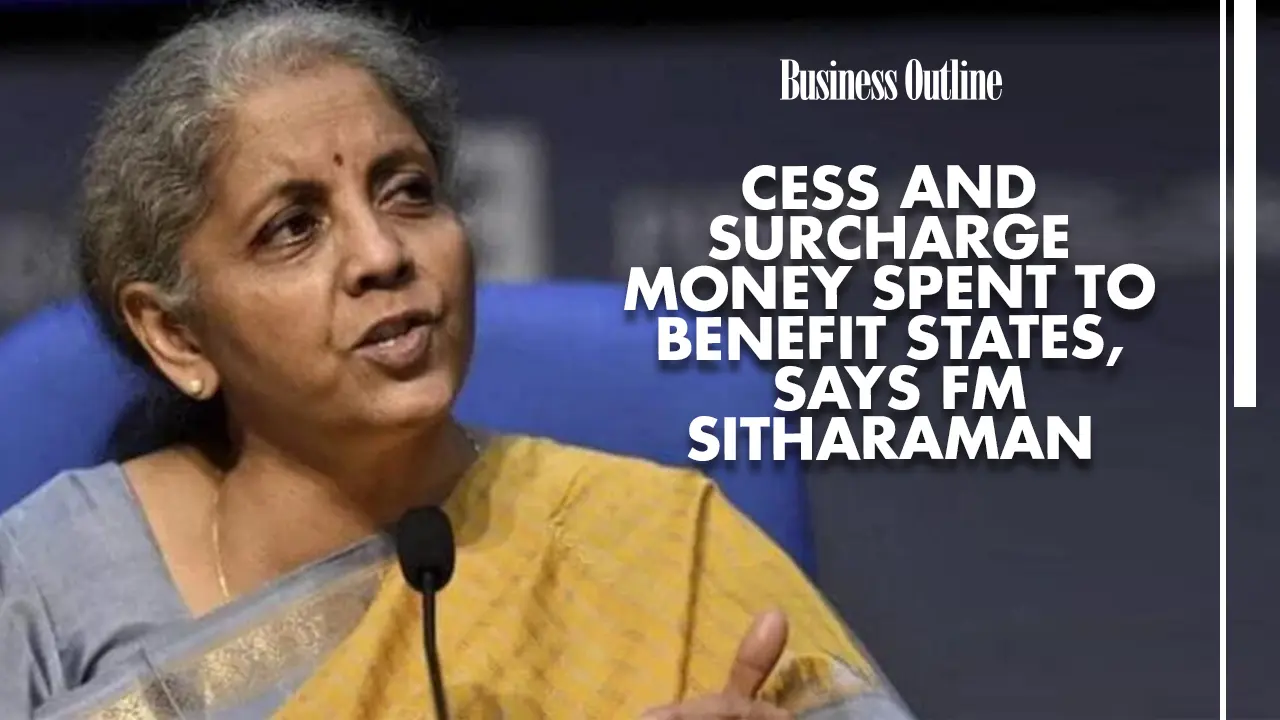
NEW DELHI: On Wednesday, Finance Minister Nirmala Sitharaman rejected state criticism of cesses and surcharges, claiming that they were constitutional and that the funds raised from them were used for state-benefitting projects.
FM stated that states should differentiate between total tax receipts and net revenues that are lawfully shareable in response to the Lok Sabha’s consideration of the budget. States are not allowed to have it both ways. After deducting the cess and surcharge from gross tax receipts, the states should verify that they are receiving all of the net earnings that make up the divisible pool, she added.
Due to the minister, 41% was being transferred to the states by the Center under the Finance Commission’s recommendation. According to the 16th Finance Commission’s analysis of the share that the Center gave the states between 2018–19 and 2022–23, the devolution that the Center implemented in each of these years precisely matched the Finance Commission’s suggestion. Therefore, we are not the only ones making this assertion. For the states, there is no room for hesitation,” the minister declared.
Sitharaman also attacked states like West Bengal, which were ruled by Mamata Banerjee’s TMC, saying that they placed more burdens on consumers while blaming the Center for the GST. Road fees and taxes are levied by the West Bengal state government when a new car is registered. Why enact extra state-level taxes if there is such worry that the GST would burden citizens? She accused Abhishek Banerjee of distorting the facts of GST, saying, “These could be waived for the people of Bengal, but instead, GST collections are criticized while state taxes continue to be levied.”
In response to Rahul Gandhi’s assertions on Indian data, she stated that the government is providing incentives for data centers in the nation. In order to allay Rahul’s worries, she also outlined policies about SEZs, customs reforms, and assistance for MSMEs. The opposition leader voiced worries about energy, geopolitics, and the weaponization of money. Although he didn’t read the budget or the actions it announced to address these issues, he stated that it acknowledges them.
FAQs: Nirmala Sitharaman on Cess, Surcharge & State Revenue Share
1. What did Finance Minister Nirmala Sitharaman say about cesses and surcharges?
The Finance Minister defended the use of cesses and surcharges, stating that they are constitutional and the funds collected are used for projects that benefit states.
2. Why are states criticizing cesses and surcharges?
Some states argue that cesses and surcharges reduce the size of the divisible tax pool, which affects the share of revenue they receive from the Centre.
3. How much tax revenue is shared with states?
As per the Finance Commission’s recommendation, 41% of the divisible tax pool is transferred from the Centre to the states.
4. What clarification did Sitharaman give about tax receipts?
She said states must differentiate between gross tax revenue and net divisible revenue, which is calculated after deducting cesses and surcharges.
5. What did the 16th Finance Commission report state?
According to Sitharaman, the 16th Finance Commission analysis showed that the Centre’s devolution to states between 2018–19 and 2022–23 matched the recommended share.
6. Why did Sitharaman criticize West Bengal?
She accused the West Bengal government of imposing additional state-level taxes, such as road fees during vehicle registration, while criticizing the Centre over GST collections.
7. What was her response to Rahul Gandhi’s concerns?
Sitharaman said the government is offering incentives for data centers, supporting MSMEs, implementing customs reforms, and strengthening SEZ policies to address economic and geopolitical concerns.
8. What issues did Rahul Gandhi raise?
Rahul Gandhi raised concerns about energy security, geopolitics, and the weaponization of global finance, questioning whether the government had adequately addressed them in the Budget.
Read more: