
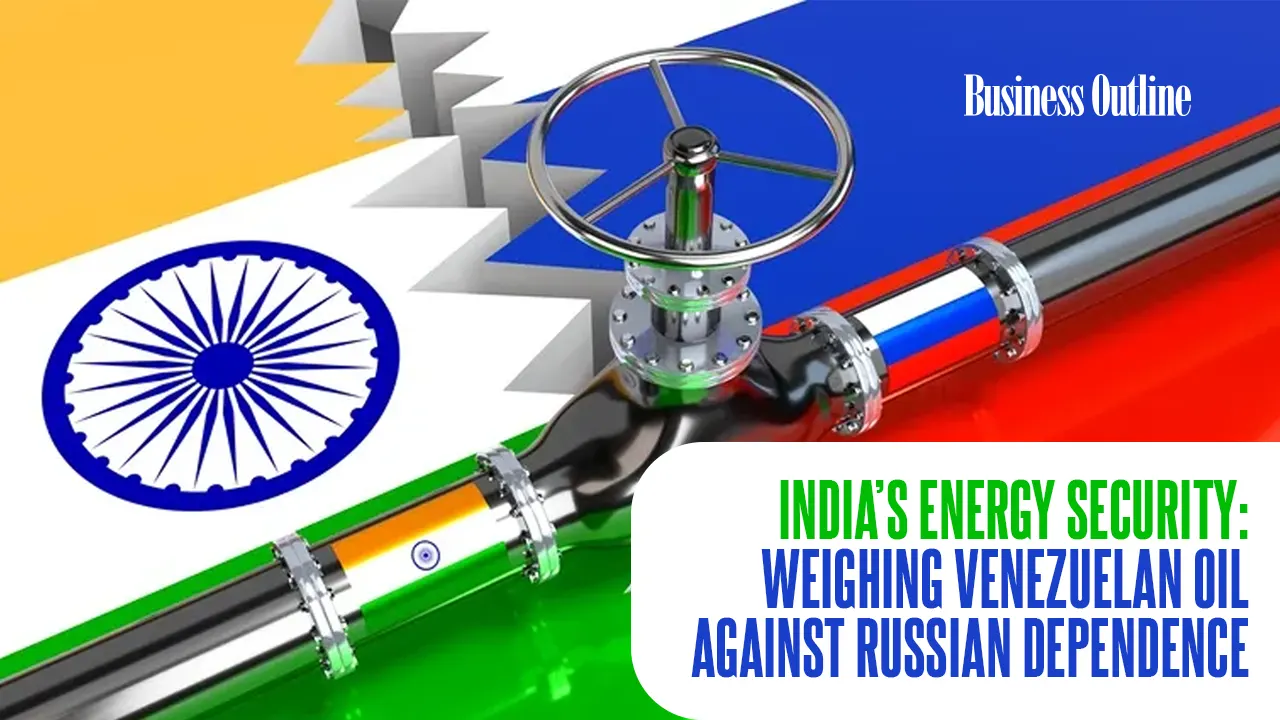
According to Reuters, the US has informed India that it can soon start buying Venezuelan oil again in order to lessen its reliance on Russian fuel.
The action is a part of a larger US effort to change energy relations between the two nations and divert India’s oil purchases from Russia. India is currently on course to decrease its imports of Russian oil by several hundred thousand barrels per day in the upcoming months, according to sources cited by Reuters.
The US has decided to offer Venezuela’s oil to India as part of a larger diplomatic effort between Caracas and New Delhi. One day after Venezuela opened its hydrocarbons sector to private enterprises, interim president Delcy Rodríguez said on Friday that she had reached an agreement with India on energy cooperation during a phone conversation with Prime Minister Modi.
Also, PM Modi stated that they “agreed to further deepen and expand our bilateral partnership in all areas, with a shared vision of taking India–Venezuela relations to new heights in the years ahead” in a post on X.
In an effort to draw in international investment and revitalize its struggling oil industry, Venezuela, which has the greatest known oil reserves in the world, recently changed its legal framework to allow private investment.
Venezuelan oil and US sanctions
In March 2025, as his government ramped up its assault against Venezuelan President Nicolas Maduro, President Donald Trump levied 25% tariffs on nations buying Venezuelan oil, including India.
After Maduro’s seizure by US forces on January 3, Washington took control of the Caracas administration and declared its intention to maintain permanent control over Venezuela’s oil sector.
India’s decreasing purchases of Russian oil
India became an important customer of Russian oil after Russia’s invasion of Ukraine in 2022 caused Western sanctions that brought prices lower. However, India has been forced to diversify its crude supplies due to increasing US pressure and rising trade prices. Last week, India’s oil minister, Hardeep Singh Puri, stated that the country is expanding its sources in response to a drop in Russian imports.
India is getting ready to cut its daily imports of Russian oil to less than a million barrels, based on two sources. According to one source, imports were roughly 1.2 million barrels per day in January and are predicted to drop to about 1 million tonnes per day in February and about 800,000 barrels per day in March. According to a different source, imports may finally drop to between 500,000 and 600,000 bpd, which would help India reach a trade agreement with the US.
After Washington imposed an additional 25% tax on sales of Russian energy, US tariffs on Indian exports topped 50% in August. Indian refiners have also increased imports from other sources because to operational difficulties imposed on by Western sanctions.
Based to trade statistics, OPEC’s proportion of Indian imports reached an 11-month high in December after India’s Russian oil imports dropped to their lowest point in two years. In order to counteract the decline in Russian supply, refiners have increased their imports from producers in the Middle East, Africa, and South America.
Refiners have already severed their connections with Russian crude. Both commercial refiner HPCL-Mittal Energy and state-owned Hindustan Petroleum and Mangalore Refinery and Petrochemicals have ceased buying Russian oil. At this week’s India Energy Week conference, authorities stated that purchases from other state refiners, such as Indian Oil Corp. and Bharat Petroleum Corp., had decreased. According to a corporate source, a private operator of the biggest refining complex in the world intends to purchase up to 150,000 barrels per day of Russian oil starting in February.
The effort to provide India with Venezuelan petroleum is also in line with Washington’s objective of reducing Russian oil earnings, which are used to finance the conflict in Ukraine. The Venezuelan oil would either be sold directly by PDVSA, the country’s national oil company, or through trading organization like Vitol or Trafigura, according to Reuters sources.
FAQ
1. Why is the US encouraging India to buy Venezuelan oil?
The United States wants India to reduce its dependence on Russian crude, which is helping fund Russia amid the Ukraine conflict. Offering Venezuelan oil is part of a broader diplomatic and strategic effort to redirect India’s oil imports.
2. What recent agreements have India and Venezuela made regarding oil?
Venezuelan interim President Delcy Rodríguez and Prime Minister Narendra Modi agreed to deepen energy cooperation. This follows Venezuela’s move to open its hydrocarbons sector to private enterprises, attracting international investment in its oil industry.
3. How significant are Venezuelan oil reserves?
Venezuela holds the largest proven oil reserves in the world, making it a potentially major supplier if the country stabilizes and allows private investment.
4. How have US sanctions affected Venezuelan oil?
In March 2025, President Trump imposed a 25% tariff on nations buying Venezuelan oil, including India. The US also took control of Venezuela’s oil sector in January 2026, claiming permanent authority over its administration.
5. Why is India reducing imports of Russian oil?
India became a major buyer of Russian oil after the 2022 Russia-Ukraine war due to discounted prices. However, increasing US pressure, higher tariffs, and trade challenges have prompted India to diversify its crude sources.
6. How much Russian oil is India importing currently?
-
January 2026: ~1.2 million barrels per day (bpd)
-
February 2026: ~1 million bpd
-
March 2026: ~800,000 bpd
-
Mid-2026 projection: 500,000–600,000 bpd
India plans to cut imports further to comply with US trade objectives.
7. How are Indian refiners responding to Russian oil restrictions?
-
HPCL-Mittal Energy and Hindustan Petroleum / Mangalore Refinery have ceased buying Russian oil.
-
Indian Oil Corp. and Bharat Petroleum have reduced purchases.
-
A private refinery plans to import up to 150,000 bpd of Russian oil starting February 2026.
Refiners have increased imports from OPEC countries, the Middle East, Africa, and South America to fill the gap.
8. How will Venezuelan oil be supplied to India?
Venezuelan crude could be sold directly by PDVSA, the national oil company, or through trading organizations such as Vitol or Trafigura.
9. How does this impact India-US relations?
The shift supports US strategic objectives while maintaining India’s energy security. It strengthens bilateral ties between India and Venezuela, with the US acting as a diplomatic facilitator.
10. What is the broader implication for global energy markets?
If India diversifies away from Russia, it could:
-
Reduce Russian oil revenues used in the Ukraine conflict
-
Open new trading channels with Venezuela
-
Increase global competition for oil supply, impacting prices and logistics
Read more: Top Business Magazine